
.png)
- Services
- Sustainability
- Company
- Facilities

.png)
.png)
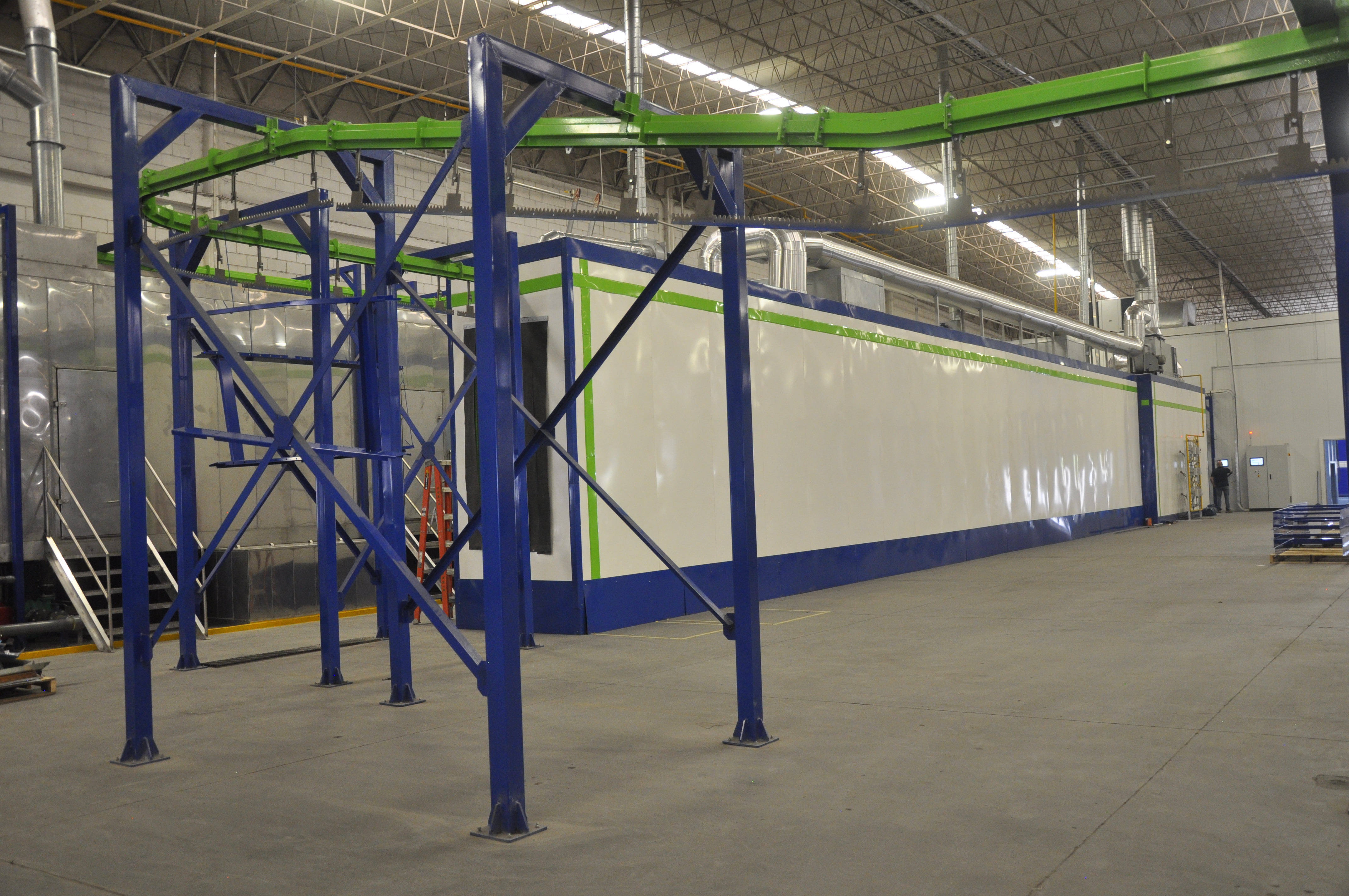
Powder coating is more than just a surface finish — it plays a critical role in protecting metal components from corrosion, wear, impact, and environmental exposure.
In modern manufacturing, durability is not just about the metal itself — it also depends on the protection applied to its surface.
Powder coating has become one of the most reliable finishing solutions for metal components across industries such as automotive, appliances, electronics, construction, and industrial equipment. Beyond appearance, it plays a critical role in improving resistance, extending product lifespan, and maintaining long-term performance in demanding environments.
Powder coating is a dry finishing process where electrostatically charged powder particles are applied to a metal surface and then cured under heat to create a durable protective layer.
Unlike traditional liquid paint, powder coating does not rely on solvents. The result is a thicker, more uniform finish with strong adhesion and high resistance to wear.
The process is commonly used for:
Metal components are constantly exposed to conditions that can compromise their performance over time, including:
Without proper surface protection, these factors can reduce product lifespan, increase maintenance costs, and lead to premature failure.
This is where powder coating becomes a key part of the manufacturing process.
One of the biggest advantages of powder coating is its ability to protect metal surfaces from corrosion.
The coating creates a sealed barrier that helps prevent moisture, chemicals, and environmental contaminants from reaching the metal underneath. This is especially important for outdoor applications or components exposed to demanding industrial environments.
For manufacturers, better corrosion resistance translates into:
Powder-coated surfaces are highly resistant to scratches, chips, and everyday wear.
Compared to many liquid paint systems, powder coating forms a tougher finish that can better withstand:
This is particularly valuable for high-volume manufacturing environments where consistency and durability are critical.
Consistency matters in manufacturing — both visually and functionally.
Powder coating provides a smooth and even finish across components, helping manufacturers maintain quality standards throughout production runs.
The process also allows for:
This becomes especially important in industries where appearance and surface quality directly impact the final product.
Durability is not only about surviving initial use — it is about maintaining performance over time.
A properly applied powder coating system helps components resist:
This contributes to lower replacement costs and improved product reliability throughout the component’s lifecycle.
Powder coating is also considered a more environmentally responsible finishing solution compared to many traditional liquid paint systems.
Because it contains little to no solvents, the process produces lower volatile organic compound (VOC) emissions. In many applications, overspray can also be recovered and reused, reducing material waste.
As sustainability becomes increasingly important across global supply chains, manufacturers continue adopting processes that support more efficient and responsible production practices.
Like any manufacturing process, the effectiveness of powder coating depends heavily on proper execution.
Factors such as:
all directly impact the final performance of the coated component.
Strong process control helps ensure:
In manufacturing, finishing is not simply the final step — it is part of the product’s overall performance.
A well-executed powder coating process helps manufacturers deliver components that not only look professional, but also perform reliably under demanding conditions.
As industries continue prioritizing durability, consistency, and long-term value, powder coating remains one of the most effective finishing solutions for metal components.
Choosing the right surface finishing process can significantly impact the quality and longevity of a product.
Powder coating offers manufacturers a strong combination of:
When combined with strong manufacturing processes and quality control, it becomes a key contributor to overall product performance.